Is editGPT Worth It?
After using the best AI book editor tools today, editGPT proved to be the best. Here are its features, pricing, and how it helps edit full manuscripts faster.
Looking for an AI book editor that's worth every cent? After using the best AI book editors today, editGPT proved to be the best investment for your book writing stack.
Even today, finding an editing tool that understands the difference between a creative plot and a formal business email is usually a struggle. Most writers are tired of tools that make their unique voice sound robotic and bland.
If you’ve ever heard about editGPT and are now on the fence, I’ve used editGPT for months with both short and longform texts and have put together a look at what makes this tool different from the basic grammar checkers you see everywhere else.
We want to see if it actually delivers the help that a serious writer needs to finish a professional project.
What Is editGPT?
Aside from the many things it can do, editGPT is a specialized space for writers who need to polish long documents without losing their own unique style and tone. It functions as a complete AI editing system designed for serious prose rather than just quick emails.
AI-powered editing platform (not just a Chrome extension)
You can use the dedicated web app to manage your writing in a focused environment instead of relying on a simple browser extension. This setup provides more power and a cleaner workspace for handling your daily editing tasks.
Designed for long-form content like books, essays, and manuscripts
The system manages files up to 200,000 words, making it easy to edit a full novel in a single project. It keeps track of the context across every chapter so your voice and terminology stay consistent from start to finish.
Combines rewriting, proofreading, and structural editing
You have access to specific modes like Streamline and Natural to handle everything from basic grammar to the rhythm of your sentences. Every suggestion appears as a redline in a track-changes view so you can decide exactly what stays in your final draft.
Why editGPT Is the Best AI Book Editor in 2026
Like most writers, I’ve used a lot of AI writing and editing tools over the years. Some excel with giving me natural-sounding conversational texts, and some are best for polishing grammar. But nothing came close to what editGPT does when it comes to long-form creative content.
1. It handles long-form content better than typical AI tools
Most writers know the frustration of using a basic AI text editor that stops working after a few thousand words. This system manages up to 200,000 words in one go, so you can upload your entire manuscript at once.
You don't have to waste time slicing your book into tiny segments just to get a single chapter checked. It stays stable even when you are dealing with a high word count, which is a huge relief for anyone finishing a book.
2. Keeps tone and voice consistent across chapters
Now, we have the challenge of keeping your character's voice steady through months of drafting. The tool tracks your specific style from the start to make sure the personality of your writing stays the same until the end.
This stops your protagonist from sounding like a different person just because you took a week off from work. It helps you keep that specific rhythm you worked hard to build without the tool trying to change your natural tone.
3. Combines multiple editing layers in one place
Then there’s the benefit of having everything in a single dashboard instead of jumping between different apps. You can look for basic typos like a simple free text editor would, but then switch over to structural improvements for your narrative.
It handles the grammar checks and the deeper rewrites in the same window to keep your workflow clean. You can toggle different modes to polish your prose exactly how you want it without losing your original ideas.
4. Reduces editing time
editGPT finds repetitive words and passive voice in a matter of seconds. This turns what used to be a month of manual work with a red pen into a few days of quick decisions. You spend less time doing the boring, repetitive chores that usually come with a second draft.
This will allow you to get your file back to your paper editor or agent much sooner than you expected. You get to spend more of your day actually writing rather than just fixing old sentences.
Key Features of editGPT
How editGPT Works for Book Editing
Actually getting editGPT to work and getting used to it is a very fast process. I noticed that it follows a simple sequence that keeps the technical side of things out of your way.
- Upload or paste your manuscript: You get things moving by dragging your Word file into the AI word editor or just pasting your text directly into the dashboard.
- Choose editing mode (rewrite, proofread, improve clarity): Next, we have the mode selection where you decide exactly how aggressive the software should be when it starts to edit it.
- Apply edits across sections or full document: You can then use the content editing tools to fix a specific scene or let the machine scan through your whole manuscript at once.
- Review suggestions and revisions: All the suggestions show up as standard track changes, so you can go through and accept only the ones that actually sound like you.
- Export polished version: Finally, you download a fresh document to your computer instead of relying on a basic free text editor to handle your professional book file.
editGPT for Authors: Real Use Cases
The the way you use this AI editor text tool depends mostly on what you are trying to publish. The great thing about editGPT is it’s great for both everyday use and creative writing.
Fiction Writers
Improve dialogue flow
The Natural mode helps you catch lines that sound too stiff or formal, which allows you to AI edit text into something that sounds like two real people talking while still maintaining the personality you set for your characters.
Maintain tone consistency
editGPT tracks your specific style across every chapter to make sure your protagonist’s voice stays exactly the same throughout the entire story.
Fix pacing issues
The Streamline setting identifies where your descriptions are getting too long and helps you cut the extra words so the plot keeps moving at a good speed.
Non-Fiction Authors
Simplify complex ideas
For those writing technical guides, the tool helps you swap out heavy industry jargon for plain English that a general audience can actually understand.
Improve clarity and structure
editGPT highlights spots where your logic might be a bit messy, allowing you to reorganize your points for a much stronger argument.
Enhance readability
This tool is also useful as an AI essay editor free of charge for the first few thousand words, helping you hit a professional reading level without overcomplicating your prose.
Self-Published Writers
Replace expensive editors
Using this system for your initial revision rounds can lower your professional editin costs by catching the obvious errors before you pay for a human review.
Speed up publishing process
Since the tool scans a full 200,000-word file in minutes, you get your final draft ready for the printer much faster than the manual alternative.
Pros and Cons
Pros
- Built for long-form writing: You can edit your paper or a full 200,000-word draft in one sitting without the system lagging or timing out.
- Strong rewriting and clarity improvements: The AI text editing modes are great at tightening up wordy paragraphs (or improving them) while keeping your main points easy to follow.
- Saves time on editing: You can trim hours off your schedule by letting the tool find repetitive words and clunky transitions that your tired eyes might miss.
- Easy to use for beginners: Navigating editGPT’s dashboard is very simple even if you aren't tech-savvy, making this a reliable revise and edit website for first-time authors.
Cons
- Still needs human review for final polish
- Not a full replacement for professional editors
- May over-edit creative writing if unchecked
editGPT Pricing
Hiring a human editor for a full novel can cost thousands of dollars. This tool can help you polish your work for under fifteen dollars instead of a giant professional invoice.
Free tier or trial
You get 10,000 words every month for free, which is perfect for a quick email or one short scene. It lets you see how the redlines work on this revise and edit website before you decide to buy a plan.
Paid plans for advanced editing features
Upgrading unlocks the ability to handle full-length manuscripts and use better AI text editing tools. These tiers include Project Mode and let you import Word files so you don't lose your original formatting.
Pro Plan
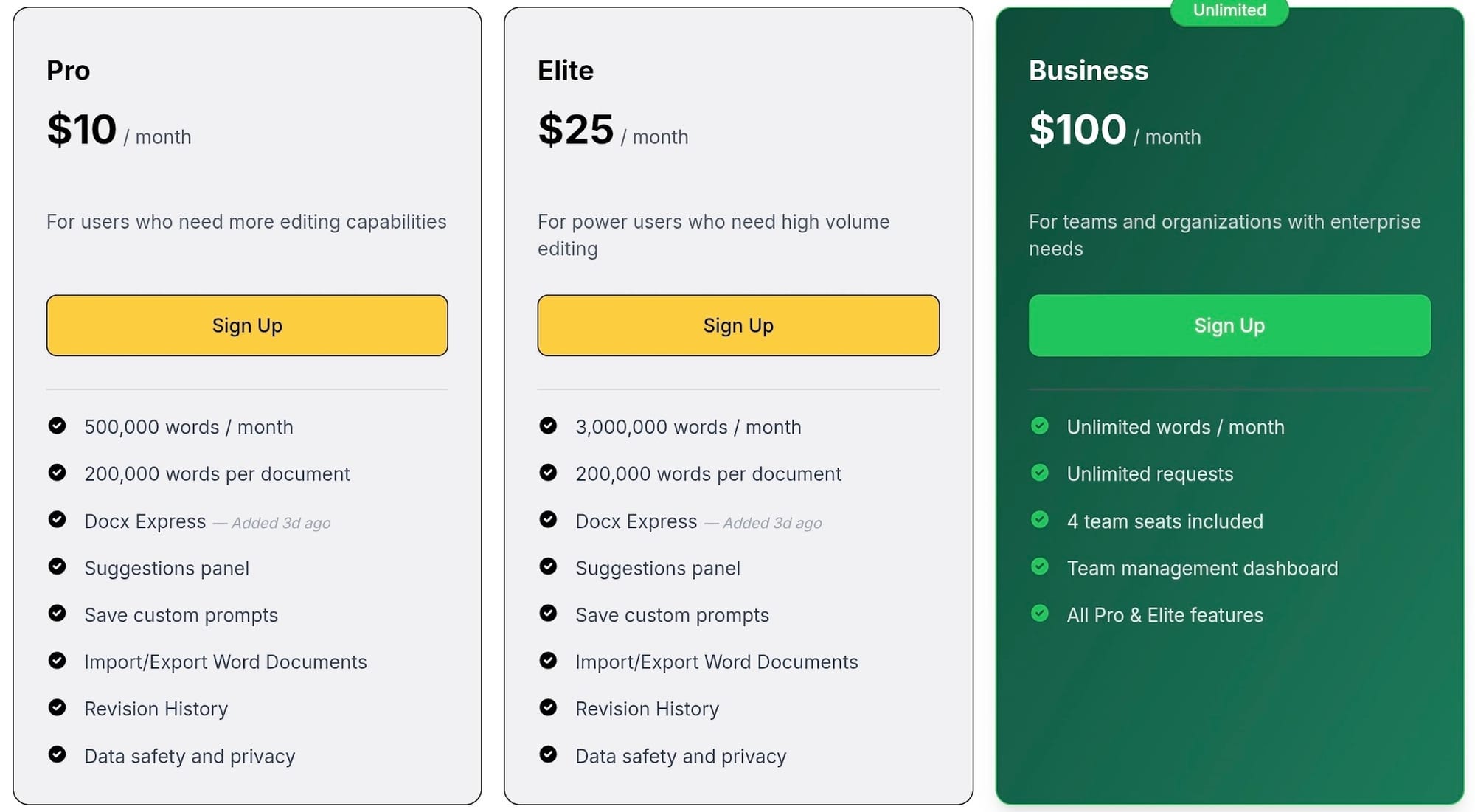
This plan costs $10 per month for 500,000 words and 200,000 words per entry and allows you to check a full novel in one session. You also get to enjoy extra features such as customized prompts.
Elite Plan
The $25 monthly tier bumps your limit to 3 million words for authors with a very heavy workload.
editGPT vs Other AI Editing Tools
Is editGPT Better Than Hiring a Human Editor?
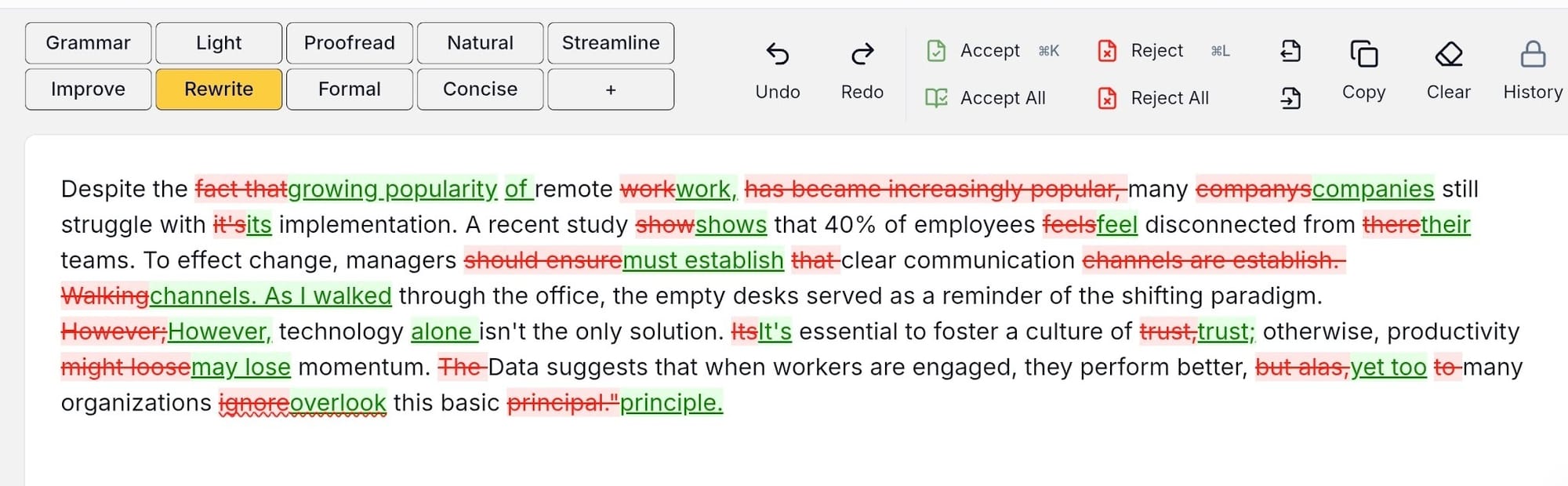
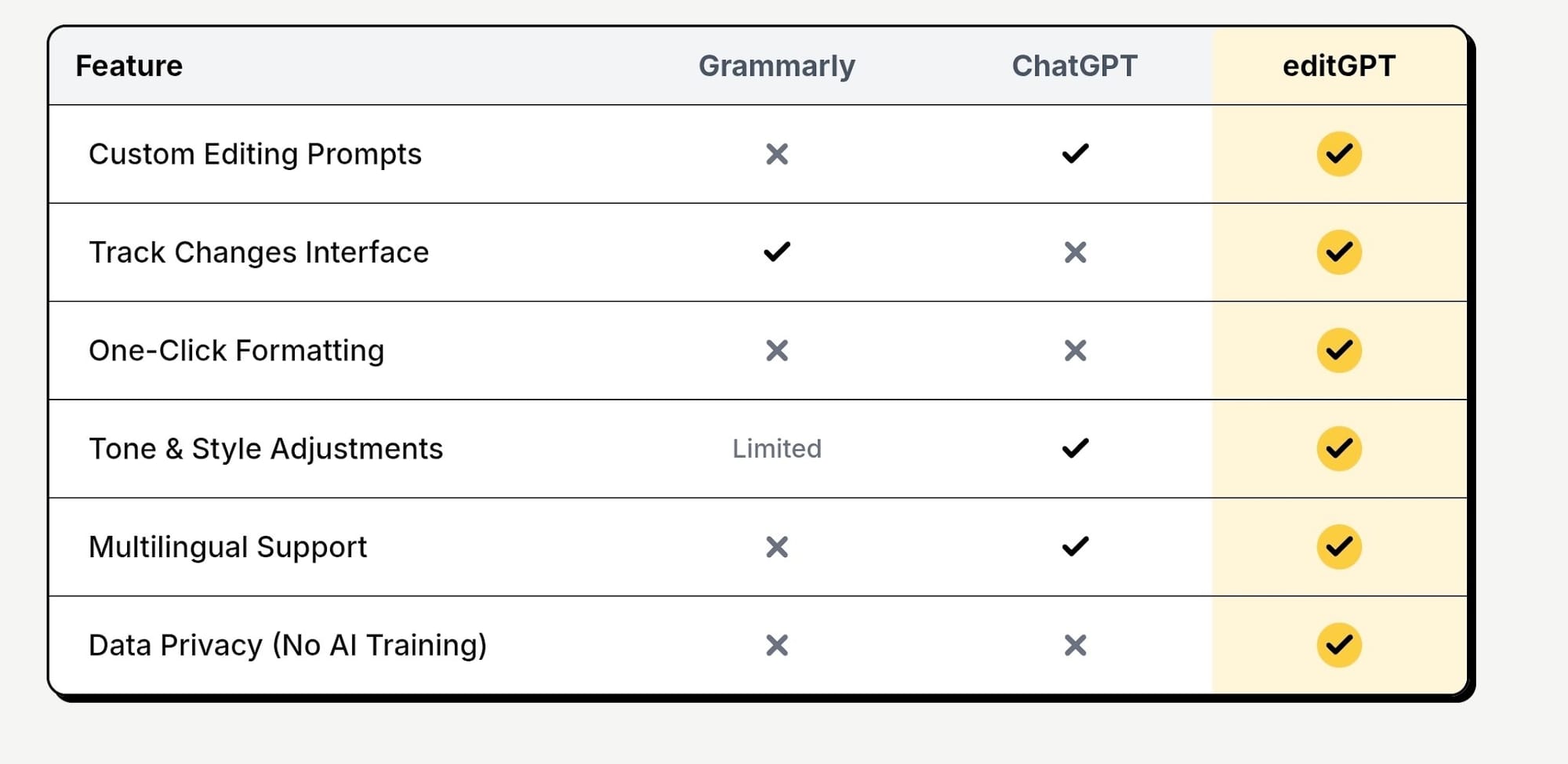
Most people think you have to choose between a person and a program, but editGPT has a specific track-changes interface that looks exactly like a manual editorial review. This visual layout gives you a level of control that usually requires a professional freelancer and a three-week wait time.
Faster and cheaper
A human editor often takes a month to return a manuscript and will send you a bill for hundreds of dollars. Using this AI text editing setup means you can process an entire novel in a single afternoon for a very low monthly fee.
It cuts out the long wait times that usually stop you from finishing your work. You get your results back instantly so you can keep working on your book without getting stuck in a long email chain.
Great for first and second drafts
I suggest using this revise and edit website to handle the initial cleanup before showing your work to anyone else. It's much better to have the software catch your repetitive words and basic typos so you aren't paying a human professional to do simple tasks.
This will make your work much more polished from the very start of the process. It's a smart way to manage the sentence-level work of editing papers online before you move into the final stages of your project.
Still not equal to deep human editing
A tool can't tell you if your main character's motivation is weak or if your plot has a mistake in the logic. You still need a person to check for the emotional impact of your story because they have real-life experience.
In other words…
The best approach is to use both. Let the technology handle the grammar and structure tasks first so you have a clean draft. Once the prose is smooth, you give it to a person to check the story and make it feel more authentic.
Who Should Use editGPT?
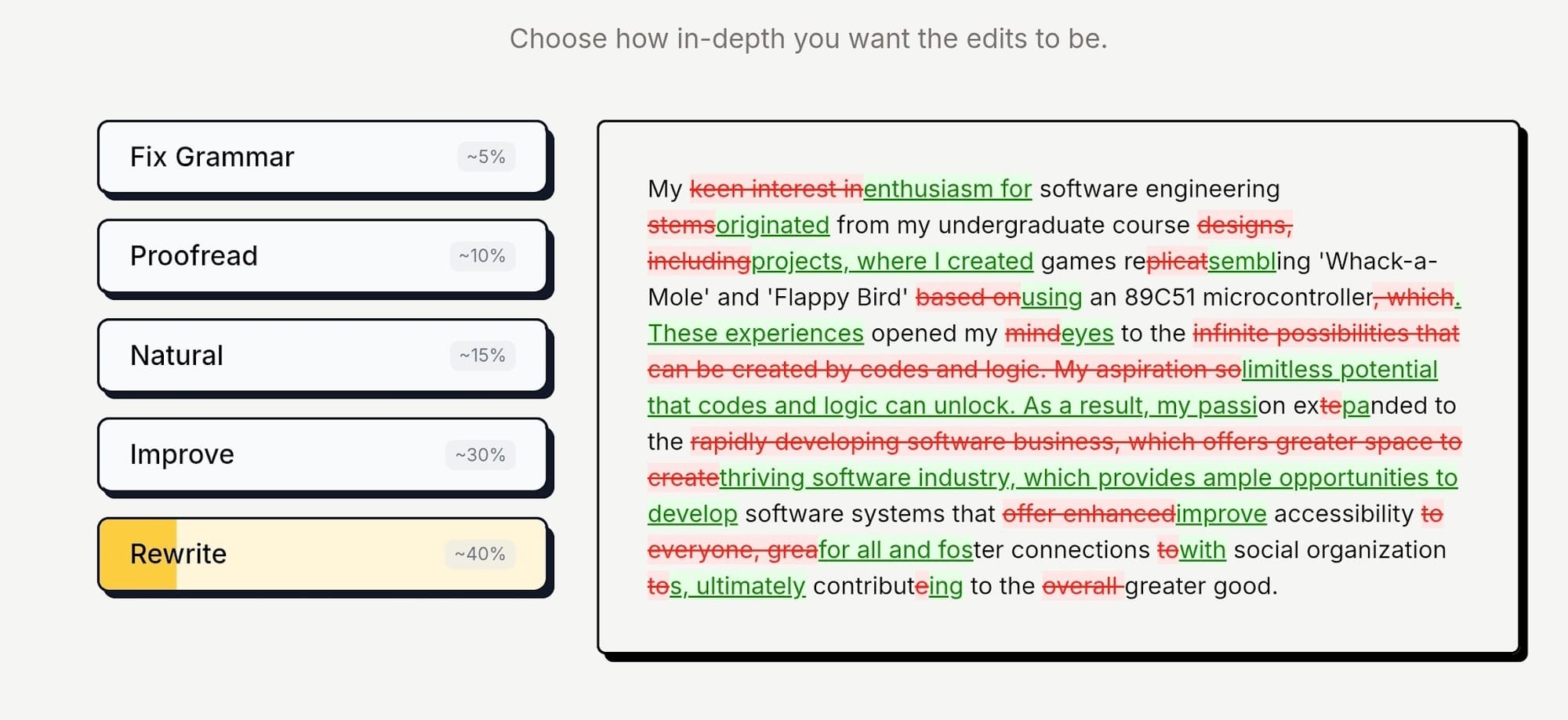
Most writers eventually reach a point where they can no longer spot their own mistakes. editGPT is designed to help with creative writing and act as a fresh set of eyes for anyone dealing with high word counts and tight deadlines.
Authors writing books
Keeping a narrative voice steady across eighty thousand words is much easier when you have a paper editing app to track your style. It flags the small grammar slips that often hide in long chapters so your storytelling stays professional.
Bloggers scaling long content
You can use editGPT as a part of your system as a fast content proofreader to polish several articles in a single session. This allows you to keep up a busy posting schedule without letting the quality of your writing slip.
Self-publishers
Getting a book ready for the digital shelf costs a lot less when you handle the first few rounds of revisions yourself. You can even use editGPT to edit my letter to potential reviewers so you look like a pro from the very first contact.
Students writing large documents
Focus on your research data and let the software handle the messy sentence structures in your thesis. It prevents those repetitive words and phrasing errors that usually ruin the flow of a long academic paper.
Final Verdict: Is editGPT Worth It?
Most AI writing tools stop working the second you upload a full-length book, but editGPT stays stable through a hundred thousand words.
It handles a long draft much better than any basic english language editing software free download you might find online. And it’s not just for English writers, as it works across more than 80 different languages with automatic detection. This makes it a great edit editor for polishing a manuscript in Spanish, French, or German without losing your specific tone.
If you’re writing or editing a manuscript, editGPT is easily one of the best proofreading and editing tools in 2026 for any longform content.
Recommended Reading
What is the best AI Proofreader?
Top 10 Creative Writing Tools in 20206
Best AI Proofreader Tools of 2026 (Tested for Accuracy, Speed & Tone)
Best AI Proofreader Chosen by the Reddit Community
Video review: This AI Text Editing Tool Is FLAWLESS!
Best AI Proofreader Tools of 2026 (Tested for Accuracy, Speed & Tone) editGPT vs Grammarly vs Quillbot: Which Writing Tool is Best?
The Best AI Proofreaders That Actually Work (Free & Paid)
Review: Wordtune Editor vs editGPT
Review: Grammarly vs editGPT
Review: ProWritingAid vs editGPT
Review: Hemingway Editor vs editGPT