7 Best ZeroGPT Humanizers in 2026 (Tested & Ranked for Writers)
I used the 7 best ZeroGPT humanizers in 2026, tested and ranked for writers. See which tools clear ZeroGPT while keeping your writing natural — editGPT leads on quality and control.
TL;DR: After weeks of using the top tools to bypass ZeroGPT, the best humanizers are:
- editGPT - Best Overall
- Undetectable AI
- WriteHuman
- HIX Bypass
- Phrasly
- StealthGPT
- Quillbot Humanizer
Running your drafts through ZeroGPT only to watch a completely original section get flagged as machine-written is a familiar frustration.
ZeroGPT remains one of the most widely used free AI detectors in 2026, and its aggressive scoring system regularly flags human writing alongside a raw ChatGPT text.
Clearing those flags without turning your prose into unreadable jargon requires a dedicated ZeroGPT humanizer that protects your core message.
But to find the best AI humanizer for ZeroGPT that consistently passes scans while keeping your writing clear, engaging, and publishable, you should know what to look out for, too.
I spent weeks testing popular humanizers against ZeroGPT to see which ones consistently clear its scanner while delivering high-quality results.
I put together this guide to give you:
- A detailed evaluation of 7 top ZeroGPT humanizers ranked by output quality and bypass consistency;
- How each humanizer handled tone, structure, and domain terms;
- Practical pros, cons, and pricing breakdowns to help you select the best tool for your situation;
Here are the 7 humanizers that actually hold up under ZeroGPT’s microscope, ranked by how well they balance scanner evasion with genuine readability.
What Is ZeroGPT? (and why it flags your text)
How ZeroGPT works
ZeroGPT is a web scanner that calculates the likelihood of text being machine-written (or AI generated). It relies on two statistical signals: perplexity, which measures word predictability, and burstiness, which checks for sentence structure variation.
AI models naturally choose probable next words and uniform line lengths.
ZeroGPT scans those rigid habits and generates an AI probability score. It’s easier to clear than academic tools like Turnitin, but raw ChatGPT output almost always triggers a flag.
Why does ZeroGPT flag human writing too?
False positives happen frequently because ZeroGPT struggles with tidy, structured human writing. If you draft clean sentences with balanced lengths and precise vocabulary, the algorithm often mistakes that polished layout for machine text.
People who never touched an AI generator still get flagged simply for writing clearly and directly. That frequent misfiring is a major reason why creators search for ways to make it sound less AI before publishing.
What a ZeroGPT humanizer does
A specialized ZeroGPT humanizer alters your draft's underlying syntax to disrupt predictable statistical signatures. It varies sentence lengths, tweaks phrase order, and drops formulaic transition habits to bring the AI score down.
If done right, a tool can lower your probability percentage without scrambling your vocabulary or destroying the text's flow. You get text that passes automated scans while staying readable for real people.
How I Tested and Ranked
To figure out which humanizers actually hold up, I put the best options through identical test runs. Every tool received the exact same raw ChatGPT drafts, and I scanned each output directly in ZeroGPT to keep these rankings grounded in real performance.
Our criteria
Clearing ZeroGPT is noticeably easier than passing institutional scanners like Turnitin. Because ZeroGPT relies on a single-pass statistical model, almost any basic tool can bring down your score if it replaces enough words.
But dropping your AI percentage means very little if your final draft turns into unreadable nonsense. For that reason, I weighted editorial quality and natural prose just as heavily as raw bypass results.
Here are the specific factors I evaluated to identify the best AI rewriters on the market:
- ZeroGPT pass reliability: I tracked how consistently each tool lowered detection probabilities below 10% across multiple test passes.
- Output quality and readability: I checked for clear grammar, accurate word choices, and smooth sentence flow that reads like genuine human writing.
- Control over edits: I looked for line-by-line revision features, customizable settings, and clear track-changes displays so you retain full creative direction.
- Long-form fit: I tested how well each tool handles full-length articles, including heading retention, list formatting, and structural context across paragraphs.
- Price and value: I compared free tier word allowances, subscription limits, and overall plan costs to see what you actually get for your money.
Comparison Table
1. editGPT - Best for Quality and Control (Top Pick)
Quick verdict
editGPT takes the top spot as the best ZeroGPT humanizer as it fixes rigid text through visible, track-changes edits instead of spinning sentences into unreadable jargon along with its incredible contextual editing.
You get to inspect, accept, or reject every single tweak, keeping your writing natural while dropping AI probability scores.
Why it wins
Most humanizers work like closed systems where you paste text and hope for the best without seeing what changed. editGPT works inside a dedicated editor where every suggestion shows up in green and red strikethrough, exactly like reviewing edits from a human copyeditor.
I uploaded a long blog draft as a .docx file, and instead of blindly swapping vocabulary, editGPT focused on contextual editing.
It analyzed surrounding paragraphs to smooth out choppy transitions, adjust sentence rhythm, and fix repetitive syntax.
You can also dial in your preferred editing depth. Toggling between preset levels like "Natural" or "Streamline,” among other modes, will let you choose between a light polish and a deeper structural rewrite depending on how stiff your raw draft feels.
ZeroGPT performance and quality
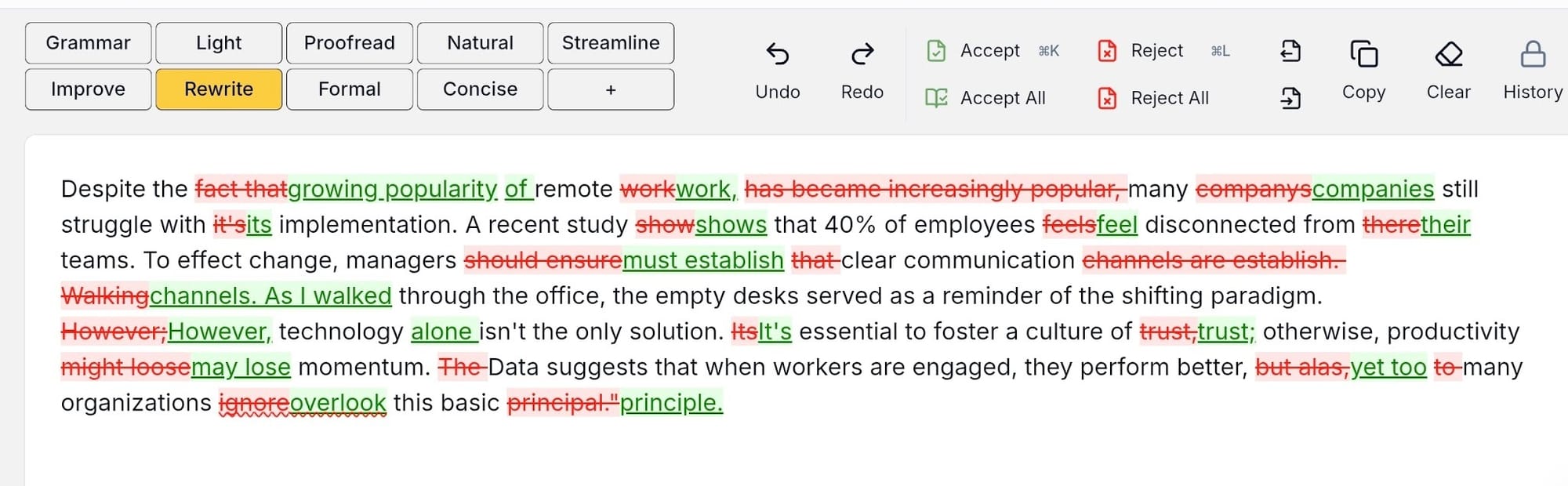
ZeroGPT flags predictable sentence lengths and formulaic word choices. editGPT targets those exact patterns by varying clause lengths and swapping generic transitions for natural phrasing.
During testing, running a raw draft through editGPT brought the ZeroGPT score down from 88% straight to zero, all without distorting my original arguments or inserting bizarre synonyms.
Best for
Authors, journalists, and long-form content creators who need clean copy that survives a real read-through rather than just bypassing an automated detector.
Pricing
- Free Plan: Includes 10,000 words per month for basic editing.
- Pro Plan: $10 per month (or $5 per month billed annually) for 200,000 words per document, custom prompts, and Word file import/export.
- Elite Plan: $25 per month (or $12 per month billed annually) for heavy production setups.
Pros:
- Full editorial control with visible track-changes display
- Preserves underlying facts and technical vocabulary through contextual editing
- Direct Word document support for managing long chapters or entire manuscripts
Cons:
- Requires manual approval for edits rather than giving a one-click instant overwrite
- Free plan word limit feels tight if you process long articles
2. Undetectable AI - Best All-in-One
What it is
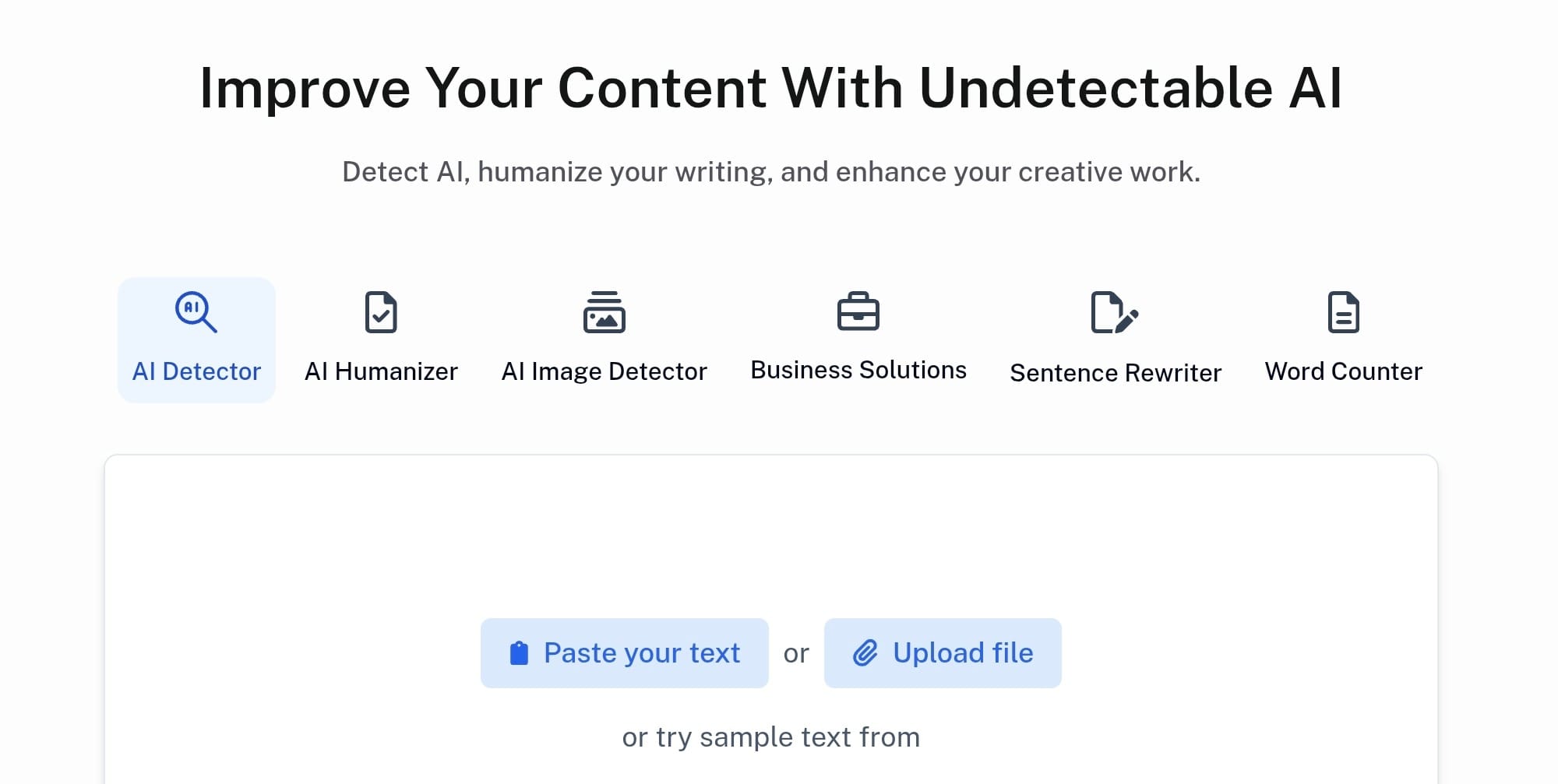
Undetectable AI functions as a combined detector plus humanizer that lets you process text and run instant checks against ZeroGPT, GPTZero, Originality.ai, and Copyleaks inline on a single dashboard.
Instead of copying and pasting drafts back and forth between separate web pages, you drop your text directly into the main editor, hit the humanize button, and view simulated detection scores generated side by side.
ZeroGPT performance
During testing runs, Undetectable AI performed reliably against ZeroGPT alongside several tougher, institution-grade detectors on the market.
The algorithm restructures sentence lengths and alters predictable word choices, dropping overall AI probability scores straight into the safe zone on the first attempt.
Having that integrated scanner right next to the editing window will keep your workflow efficient since you immediately know if a section needs another pass.
Where it falls short
The primary drawback with this tool becomes obvious when you upload specialized or technical drafts.
The humanization engine frequently swaps out exact industry terminology for generic, simplified synonyms, which forces you to review the output line by line and manually put back your technical terms.
On top of that, its dashboard offers no built-in plagiarism checking, meaning you still need a third-party tool if you want duplicate content scans. Finally, while individual tiers remain accessible, high-volume team setups and agency packages get pricey fast as soon as you need higher monthly word limits.
Best for / price
Ideal for users who want to humanize and re-check ZeroGPT in one place. Pricing starts from $9.99/mo (cheaper when billed annually).
3. WriteHuman - Best Simple Humanizer
What it is
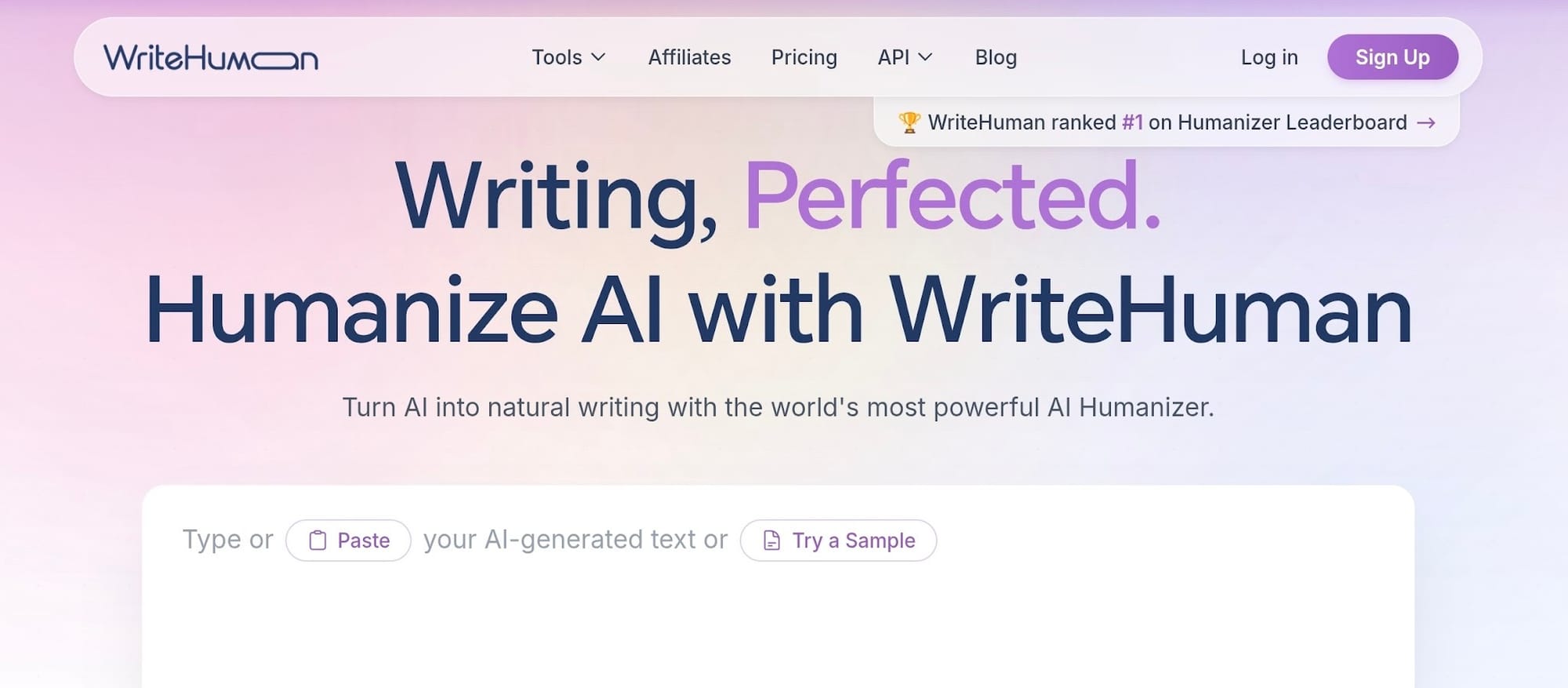
WriteHuman provides a clean workspace focused on quick output adjustments, giving you light control over tone and readability settings.
Rather than overwhelming you with endless setup options, the interface centers around a straightforward text box where you paste your text, adjust basic sliders, and run the conversion. It strips away secondary tools like document managers or multi-engine dashboards, keeping the focus entirely on fast sentence rewrites.
ZeroGPT performance
This tool clears ZeroGPT scans well when processing standard blog posts, web copy, and everyday drafts. The underlying model alters formulaic word sequences and introduces sentence length variation to drop overall detection scores on the first attempt.
On the other hand, lower subscription tiers enforce strict per-request word caps (such as 600 words per submission on the entry-level package) which slows down your workflow when handling longer drafts.
Where it falls short
Its main limitation is the lack of granular editing control once the tool generates your output. You can’t inspect specific phrase choices, toggle line-by-line track changes, or manually lock specific vocabulary in place.
Because of the strict submission caps on standard plans, processing lengthy documents requires you to manually slice your text into small chunks, paste them individually, and stitch the results back together.
Best for / price
Ideal for creators who want a straightforward, one-click process without navigating complex settings. The Basic tier starts around $12 per month when billed annually (or $18 month-to-month) for up to 80 submissions.
4. HIX Bypass - Best for SEO Content
What it is
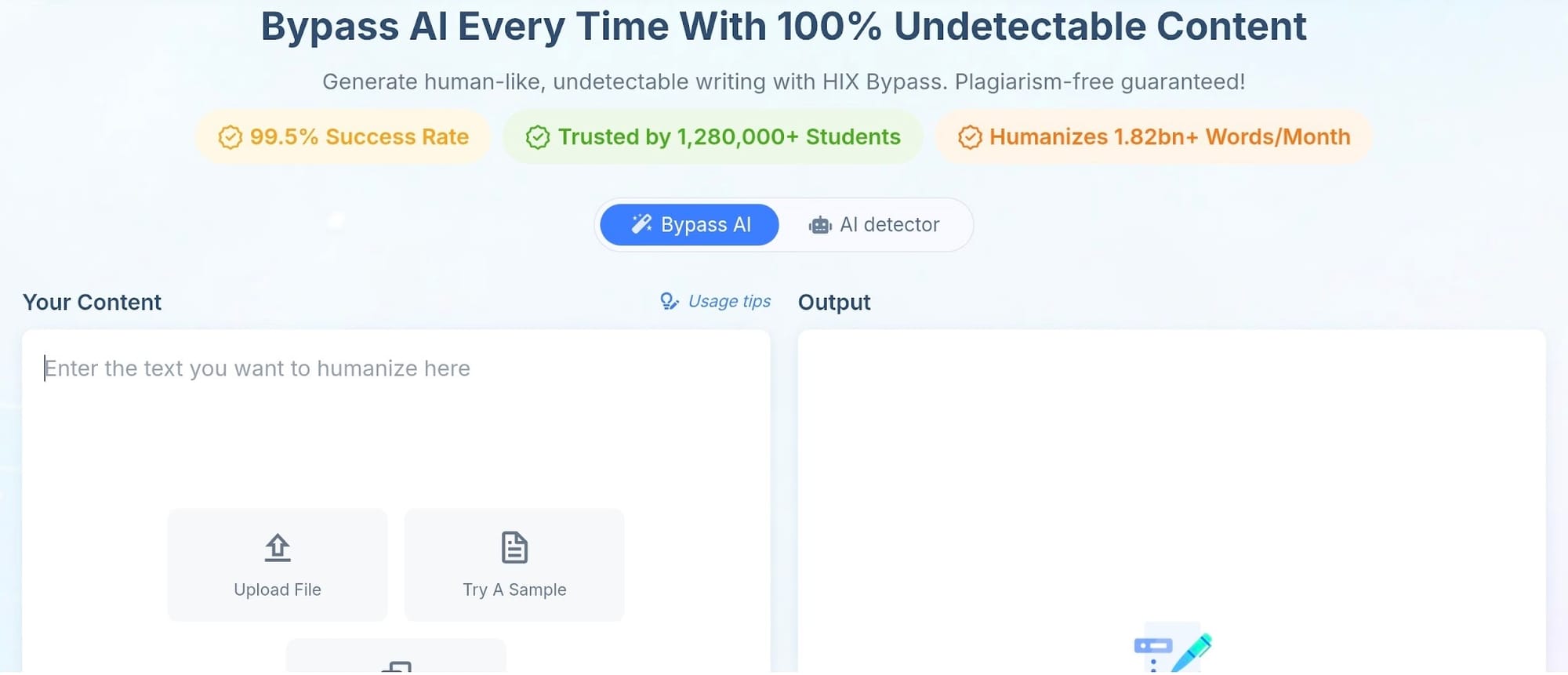
HIX Bypass functions as a multi-detector humanizer built specifically to rewrite AI copy while leaving document formatting completely untouched.
Drop a structured article with markdown headers, numbered lists, and bold callouts into the system, and it output-checks the text against ZeroGPT alongside other major detectors.
Having that layout protection will save you significant editing time since you don’t have to spend minutes rebuilding heading structures or re-formatting bullet points after processing.
ZeroGPT performance
This tool delivered consistent results across its available processing modes, with the Balanced mode consistently proving to be the sweet spot for clean score drops.
By making smart adjustments to phrase order and sentence variation, it lowered AI probability in my texts without garbling the flow of the paragraphs.
There’s no input word limit per process, which makes running entire blog drafts through the converter smooth and efficient. You can also use an undiluted ai detector bypass feature to verify your score right after rewriting.
Where it falls short
The main drawback centers on API access and scaling costs for larger workflows. Access to their API is strictly enterprise-gated, meaning development teams cannot easily pipe the engine into custom automated CMS setups without going through custom enterprise sales channels.
On top of that, subscriptions become noticeably pricier at higher word volumes, making it a heavy investment for high-capacity publishing operations.
Best for / price
Ideal for SEO teams and publishers needing humanized text that keeps its original document structure. Mid-tier pricing starts around $14.99 per month for a standard monthly plan, with discounts available if you opt for yearly billing.
5. Phrasly - Best Value
What it is
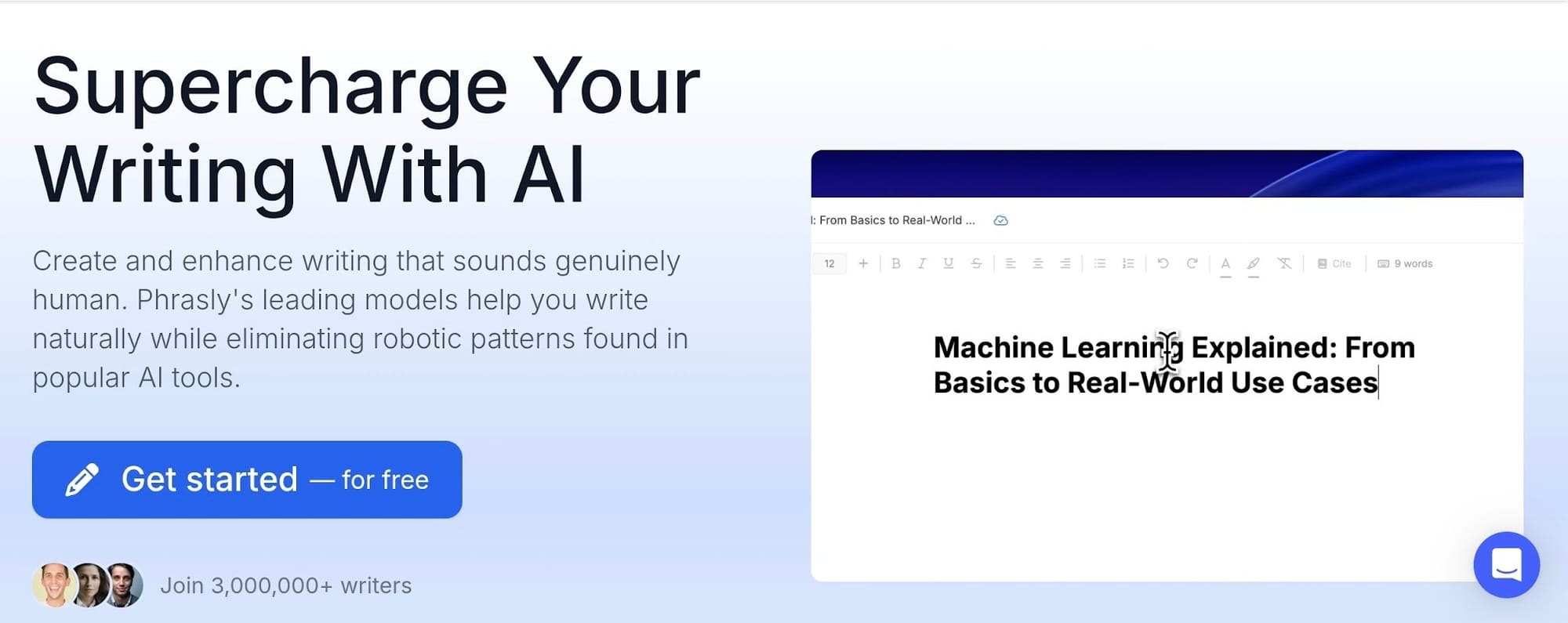
Phrasly offers a budget-conscious humanizer that manages standard blog-length content without requiring steep monthly investments. its interface strips away extra fluff to focus strictly on converting AI drafts into natural, human-sounding text.
Instead of complex toggles, you paste your text into the editor, click to process, and receive an updated version that breaks up uniform machine patterns.
ZeroGPT performance
In head-to-head testing, Phrasly cleared ZeroGPT consistently when handling standard, conversational articles and everyday blog posts. The underlying model targeted predictable sentence rhythms and swapped out rigid word choices to bring overall AI percentages of my drafts down fast.
If you need a reliable way to make text bypass AI detectors without navigating an overly complicated dashboard, it can get the job done cleanly.
Where it falls short
Where the tool struggles is granular editorial control. You can’t view side-by-side track changes, adjust specific sentence-level parameters, or lock certain terms in place before processing.
It also handles long-form content with less precision, occasionally losing paragraph context or outputting repetitive phrasing when fed lengthy, highly technical documents.
Best for / price
A top pick for students and independent creators operating on a tight budget who need a simple bypass tool. The Unlimited tier starts at an entry-level $10.99 per month, giving you full access to its humanization capabilities.
6. StealthGPT - Best for Short-Form
What it is
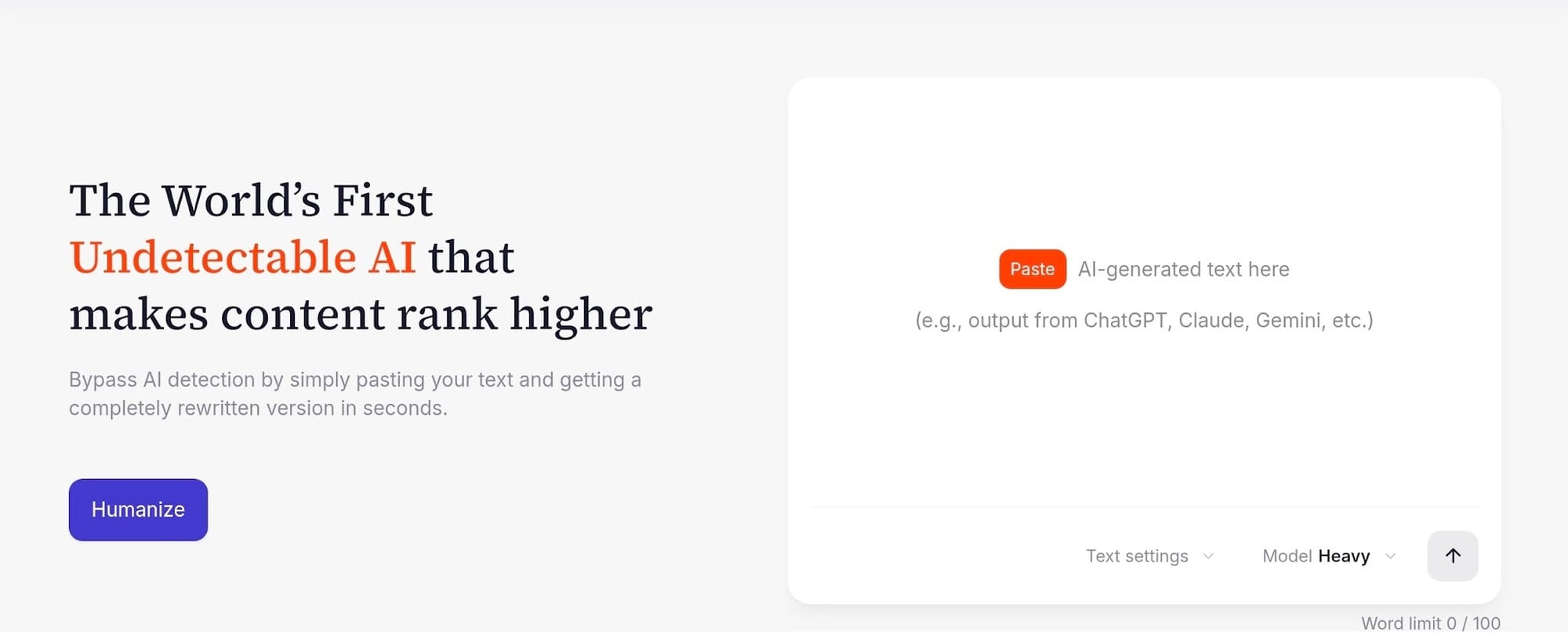
StealthGPT was built for quick, rapid rewrites. You drop a short paragraph into the text box, hit the button, and grab your output. It skips extra dashboard features or complex editing setups, keeping the focus entirely on fast sentence processing.
ZeroGPT performance
It performs fine on short text. Brief updates, social captions, and quick paragraphs usually slide right past ZeroGPT without much trouble. Once you push past roughly 400 words in a single pass, though, the output gets visibly repetitive.
The model cycles back to the same sentence structures over and over, which makes full articles sound monotonous unless you step in to edit them.
Where it falls short
Longer drafts reveal its biggest limits. Edits stay mostly on the surface, meaning you still end up doing manual polish to keep paragraphs reading like genuine human prose.
It skips plagiarism checks completely, so you need a separate scanner to check for duplicate copy.
On top of that, standard pricing feels high compared to competing tools, especially when you factor in daily request caps.
Best for / price
Good option for brief updates or casual snippets when you just want a quick fix. Pricing starts at around $15 to $18 per month on promotional billing, scaling up to $34.50 monthly for the standard entry tier.
7. QuillBot Humanizer - Best Known, but a Paraphraser
What it is
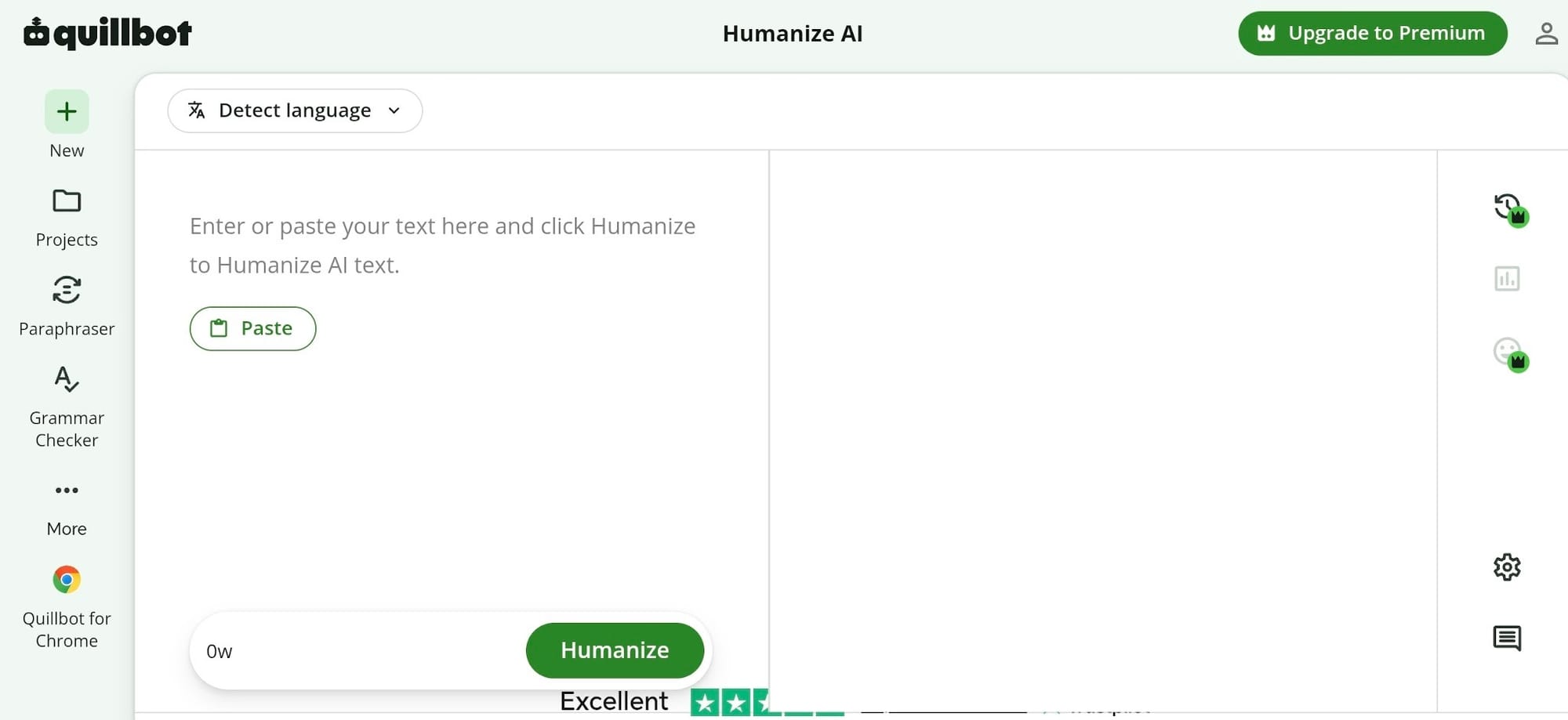
QuillBot remains one of the most recognized writing tools on the web. It includes a specific humanize mode alongside its classic paraphrasing options, letting you rephrase sentences or adjust vocabulary directly inside its web editor.
ZeroGPT performance
You might clear ZeroGPT on light, simple drafts, but QuillBot is fundamentally a paraphraser rather than a true bypass tool.
And distinction matters.
Tests show it failing tougher scans, frequently scoring around 71% on detectors like GPTZero, because it swaps synonyms without deeply altering the underlying sentence syntax. It leaves behind the exact mathematical patterns detectors look for.
Where it falls short
Because Quillbot was never purpose-built for detection evasion, its structural edits stay minimal. Tight input word caps on the free version also force you to process text in tiny chunks, which grinds longer projects to a halt.
Best for / price
Great for quick readability polish, fixing grammar, or rewording an awkward sentence. It's not designed for high-stakes AI detection bypass. You can use a limited free tier, while paid plans start around $8.33 to $10 per month when billed annually.
How to Rewrite AI-Generated Text to Pass ZeroGPT (Quick Guide)
Rewriting AI generated text comes down to breaking the mechanical habits detector algorithms flag. Here’s a quick step-by-step process:
- Vary sentence length. Mix brief, punchy statements with longer sentences to mess with the uniform rhythm ZeroGPT looks for.
- Purge common AI tells. Cut words like "moreover," "furthermore," or generic filler intros, and drop in contractions to build a real human voice.
- Swap vague claims for specifics. Replace broad generalizations with concrete facts, dates, and direct details.
- Re-check your score in ZeroGPT. Run your updated draft back through the scanner to confirm the score drop before publishing.
Fixing all of that by hand across a multi-page draft usually gets exhausting fast. An editor like editGPT can handle this exact cleanup automatically, giving you tracked, reviewable edits so you stay in total control of your final draft while making it sound less AI.
Pros and Cons of ZeroGPT Humanizers
Pros
- Clears false flags: Detectors regularly flag completely original human writing simply because a passage uses clean, direct grammar. A good humanizer can restructure those predictable patterns so your authentic work passes without getting unfairly tagged.
- Improves overall readability: The rewriting process naturally breaks up monotonous sentence structures, cuts unnecessary filler, and cleans up stiff phrasing, leaving you with text that flows better for actual human readers.
- Speeds up your editing workflow: Fixing repetitive syntax line by line across a five-page draft takes significant time. Automated rewriting tools handle the heavy lifting in seconds, letting you publish faster.
Cons
- Output quality varies wildly: Cheap or poorly designed tools often pass ZeroGPT scans by simply swapping words for odd synonyms, leaving you with garbled, awkward sentences that look completely unprofessional.
- Passing ZeroGPT does not mean passing Turnitin: ZeroGPT uses a relatively simple, single-pass statistical model. Clearing its threshold offers zero guarantee that your text will survive stricter institutional software like Turnitin or Originality.ai, which analyze deeper semantic structure.
Who Should Use These Tools
- Writers and authors: Clean up drafts, fix robotic sentence cadences, and protect long manuscripts from getting flagged before sending work to editors.
- Students clearing false flags: Protect original essays from simple detector algorithms that often misclassify clean, formal academic prose as machine-generated text.
- Content creators: Speed up your editing timeline and humanize batch drafts so blog posts and social copy read naturally for your audience.
- Non-native English writers: Smooth out rigid syntax and formulaic phrasing that statistical scanners routinely flag as potential AI content.
Frequently Asked Questions
What's the best ZeroGPT humanizer?
editGPT takes the top spot for overall edit quality and control, giving you full review powers over every sentence. Other choices trade off specific capabilities like automatic multi-detector scanning or simple one-click generation.
How do I get past ZeroGPT for free?
You can manually rewrite your draft by breaking up rigid sentence lengths and cutting predictable vocabulary. If you prefer software, editGPT offers a monthly free plan and QuillBot provides basic paraphrasing without charging a dime.
Why did ZeroGPT flag my human writing?
ZeroGPT looks for predictable word order and uniform sentence lengths, which clean academic writing often produces by default. This statistical matching means false positives happen frequently on completely authentic drafts.
Does passing ZeroGPT mean passing Turnitin?
No, clearing ZeroGPT doesn’t guarantee a clean score on better designed detectors. Turnitin uses deeper, multi-layered models that catch subtle structural patterns basic scanners miss.
Can I humanize text without changing the meaning?
A well-designed humanizer tool can update your sentence structure and style while keeping your core facts intact. Meaning drift usually signals a lower-quality rewriter that relies on crude synonym swapping.
Final Verdict
After testing across multiple tools, editGPT is the best humanizer to bypass ZeroGPT and for keeping your writing clear, natural, and fully under your control. Its track-changes editor lets you approve every single tweak, fixing robotic syntax without wrecking your natural voice.
The alternatives work fine for specific tasks, but they all carry obvious trade-offs.
Undetectable AI offers a handy multi-detector dashboard while WriteHuman keeps things simple, though tight word limits make long drafts annoying to process.
HIX Bypass protects your headers and formatting, but high-volume tiers get pricey fast. Phrasly keeps costs down while sacrificing a bit of editorial control, and QuillBot is really just a paraphraser that frequently triggers strict scanners.
Picking a tool that respects your original meaning saves you hours of tedious cleanup. The thing is great writing still beats rigid algorithms!
Recommended Reading
7 Best QuillBot Alternatives for AI Paraphrasing and Content Rewriting
QuillBot vs editGPT: We Tested the Best AI Proofreaders in 2026
What is the best AI Proofreader?
Top 10 Creative Writing Tools in 20206
Best AI Proofreader Tools of 2026 (Tested for Accuracy, Speed & Tone)
Best AI Proofreader Chosen by the Reddit Community
Video review: This AI Text Editing Tool Is FLAWLESS!
Best AI Proofreader Tools of 2026 (Tested for Accuracy, Speed & Tone) editGPT vs Grammarly vs Quillbot: Which Writing Tool is Best?
The Best AI Proofreaders That Actually Work (Free & Paid)
Review: Wordtune Editor vs editGPT
Review: Grammarly vs editGPT
Review: ProWritingAid vs editGPT
Review: Hemingway Editor vs editGPT